


SKU:WSAL27094
BG95 EVB Development Board Designed For QuecPython, Low Power Consumption, Supports LTE / EGPRS Communication And GNSS Positioning
Abholverfügbarkeit konnte nicht geladen werden
Compact & Portable Development Board Designed for QuecPython
Supports LTE Cat M1 / LTE Cat NB2 / EGPRS Communication, GNSS Positioning
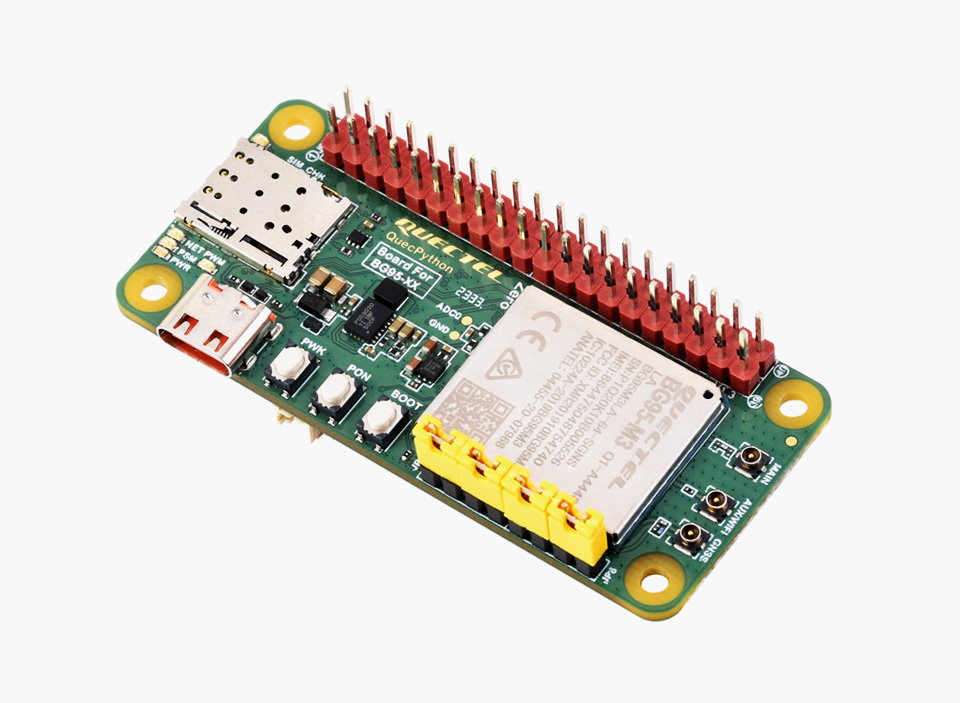
TheBG95-M3 Zero development board is equipped with BG95-M3 module, which is a multi-mode LPWA module supporting LTE Cat M1 / LTE Cat NB2 / EGPRS. It is 3GPP Rel-14 compliant and offers maximum data rate of 588 kbps downlink and 1119 kbps uplink under LTE Cat M1. Features ultra-low power consumption with built-in MCP as well as the ARMCortex A7 processor supporting ThreadX.
- Equipped with BG95-M3 main module, supports LTE Cat M1 / LTE Cat NB2 / EGPRS networking, applicable across global regions
- Onboard 40PIN GPIO header, compatible with most Raspberry Pi HATs
- 5 LEDs for indicating module operating status
- Onboard Type-C port for easy development with just a USB Type-C cable
- Supports PPP, TCP, UDP, SSL, TLS, FTP(S), HTTP(S), NITZ, PING, MQTT, LwM2M, CoAP, IPv6 protocols, etc.
- Supports GNSS positioning (GPS, GLONASS, BDS, Galileo, QZSS)
- Onboard Nano SIM card slot, supports 1.8V SIM card, and is designed near the edge of the board for easy insertion and removal of SIM card
- Provides tools such as QPYcom, Thonny IDE plugin, and VSCode plugin, etc. for easy learning and development
- Comes with online development resources and manual (example in QuecPython)
| Model | BG95-M3 | EC200U-EU | EC200U-AU |
|---|---|---|---|
| Product Picture |  |  |  |
| Applicable Region | Global | Europe, Middle East, Africa, Australia, New Zealand, Brazil | Australia/Latin America |
| Frequency Band | |||
| LTE-FDD | Cat M1: B1, B2, B3, B4, B5, B8, B12, B13, B18, B19, B20, B25, B26, B27, B28, B66, B85Cat NB2: B1, B2, B3, B4, B5, B8, B12, B13, B18, B19, B20, B25, B28, B66, B71, B85 | B1, B3, B5, B7, B8, B20, B28 | B1, B2, B3, B4, B5, B7, B8, B28, B66 |
| LTE-TDD | N/A | B38, B40, B41 | |
| GSM / GPRS / EDGE | 850, 900, 1800, 1900 MHz | GSM: B2, B3, B5, B8 | |
| GNSS | GPS, GLONASS, BDS, Galileo, QZSS | ||
| Bluetooth | N/A | Bluetooth 4.2 (BR/EDR) | |
| Wi-Fi Scan | N/A | 2.4 GHz 11b (Rx) | |
| Data transmission | |||
| CAT 1 | N/A | LTE-FDD: DL 10 Mbps; UL 5 MbpsLTE-TDD: DL 8.96 Mbps; UL 3.1 Mbps | |
| NB-IoT | Cat NB2: DL 127 Kbps; UL 158.5 KbpsCat NB1: DL 32 Kbps; UL 70 Kbps | N/A | |
| Cat-M | DL 588 Kbps; UL 1119 Kbps | N/A | |
| GSM / GPRS / EDGE | EDGE: DL 296 Kbps; UL 236.8 KbpsGPRS: DL 107 Kbps; UL 85.6 Kbps | GSM: DL 85.6 Kbps; UL 85.6 Kbps | |
| Others | |||
| Type-C USB Port | Supports AT commands testing, GNSS positioning, firmware upgrading, etc. | ||
| Communication Protocol | PPP, TCP, UDP, SSL, TLS, FTP(S), HTTP(S), NITZ, PING, MQTT, LwM2M, CoAP, IPv6 | TCP, UDP, PPP, NITZ, PING, FILE, MQTT, NTP, HTTP, HTTPS, SSL, FTP, FTPS, CMUX, MMS | |
| SIM Card | Nano SIM card (supports 1.8V only) | Nano SIM and eSIM, dual card single standby | |
| Indicator | SIM_CHK: lights up when a SIM card is inserted into the card slotNET: Network indicatorPSM: Sleep indicatorPWM: PWM function indicatorPWR: Power indicator | P01: Module Pin 1, default as EC200A-XX PWM0 P05: Module Pin 5, NET_MODE indicator SCK1: SIM1 detection indicator, lights up when SIM1 card is inserted SCK2: SIM2 detection indicator, lights up when SIM2 card is inserted PWR: Power indicator | |
| Buttons | PWK: Power ON/OFFPON: PSM wake-upBOOT: Forcing into firmware burning modeUSB ON/OFF: USB power consumption detection switch | PWK: Power ON/OFF RST: Reset BOOT: Forcing into firmware burning mode USB ON/OFF: USB power consumption detection switch | |
| Antenna Connectors | LTE main antenna + DIV antenna + GNSS antenna | LTE main antenna + DIV / WIFI (scanning only) / Bluetooth antenna + GNSS antenna | |
| Operating Temperature | -30 ~ 75°C | ||
| Storage Temperature | -45 ~ 90°C | ||
easy to develop with just a USB Type-C cable
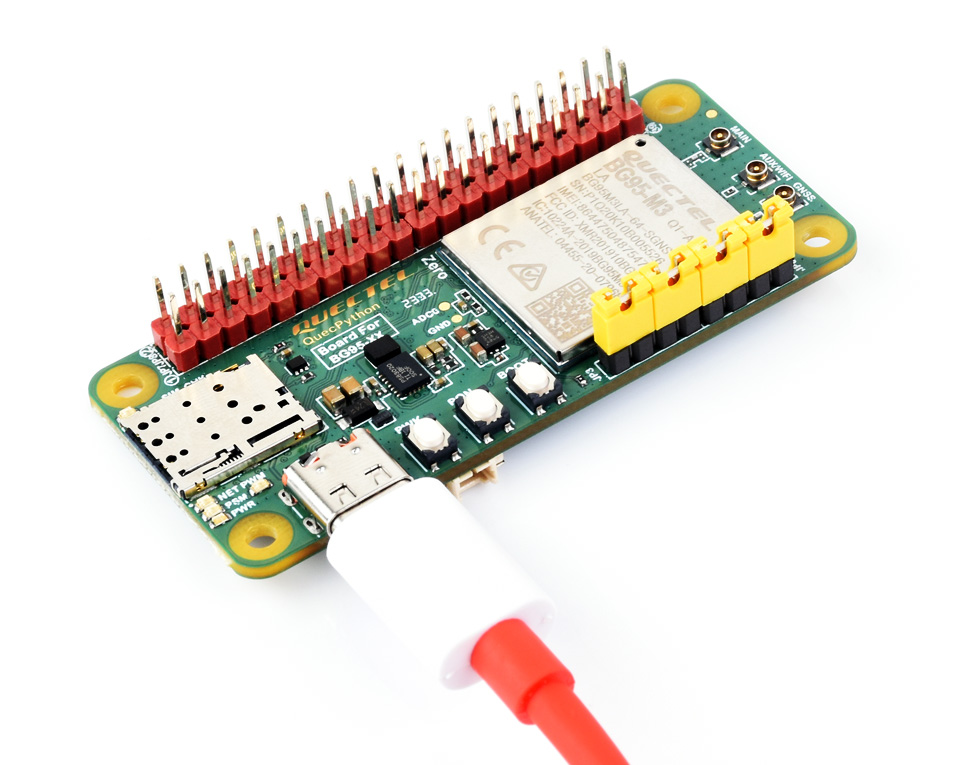
Compatible with most Raspberry Pi HATs
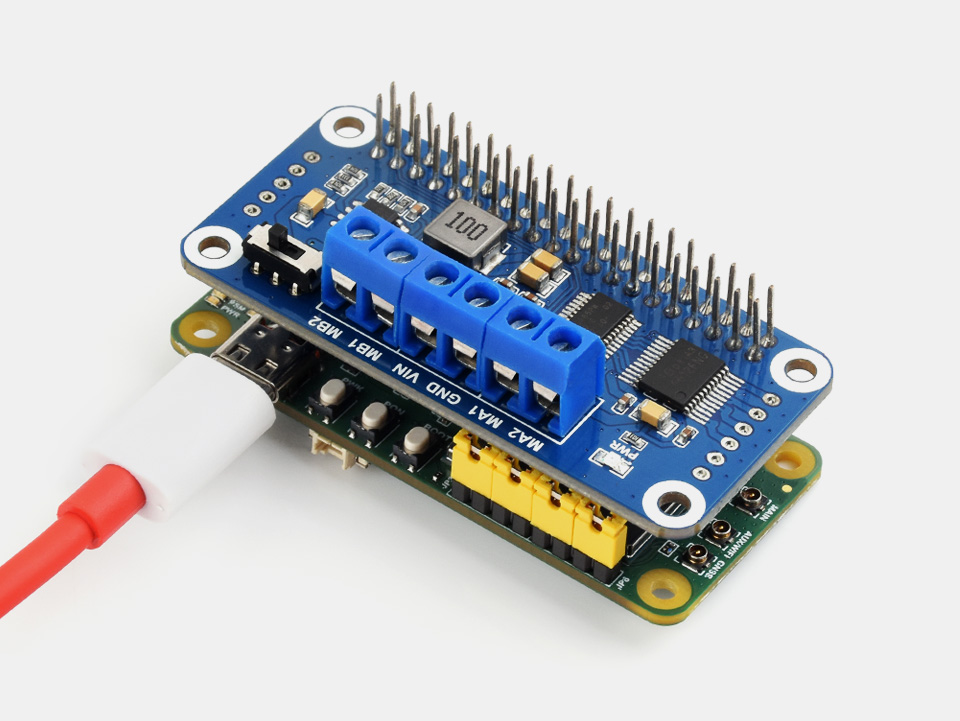
Provides tools such as QPYcom, Thonny IDE plugin, and VSCode plugin, etc. for easy learning and development

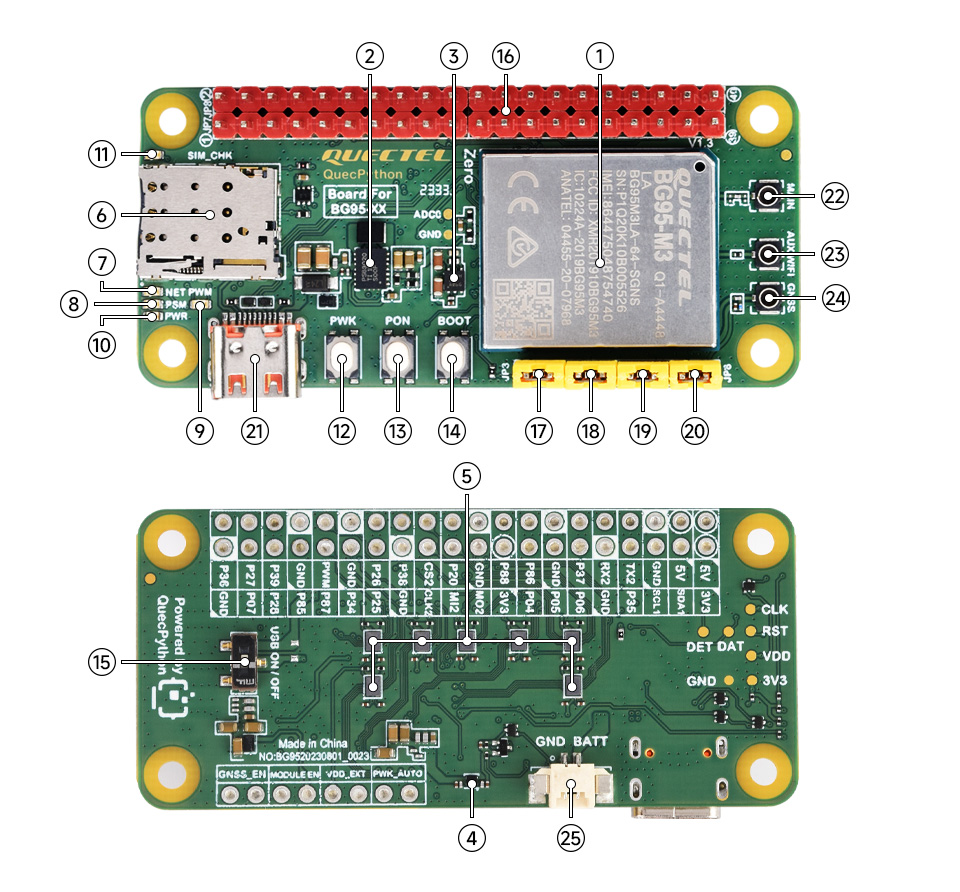
Onboard Components
- BG95-M3 module
- TPS63020DSJR power IC
- TLV75533PDRVR power IC
- NCP114AMX180TBG power IC
- TXS0104EYZTR voltage level translator
- Nano-SIM card slot
- NET Network indicator
- PSM Sleep indicator
- PWM function indicator
- PWR Power indicator
- SIM_CHK indicatorlights up when SIM card is inserted
- Power ON/OFF button
- PSM wake-up button
- BOOT buttonPress before powering on to force firmware burning mode
- USB detection ON/OFF Normally closed: USB can be connected normally; Normally open: Type-C supplies power only to the evaluation board, used for module power consumption measurement
Interfaces
- Raspberry Pi GPIO HeaderCompatible with Raspberry Pi HATs, for more details, please refer to Pinout Definition
- Power ON/OFF jumperConnect: auto turn on, short press PWK button to restartDisconnect: short press PWK button to power on, long press to power off
- 1.8V output jumperConnect: outputs 1.8V externallyDisconnect: used to test power consumption
- Module power supply jumper Connect: DCDC to power the module
- GNSS active power supply selection Connect: enable GNSS active power supply
- USB Type-C port
- Main antenna connector
- AUX antenna connector
- GNSS antenna connector
- Battery power supply headerSupports 2.5V-5.5V battery (Note: the board cannot be powered by USB port and battery at the same time)
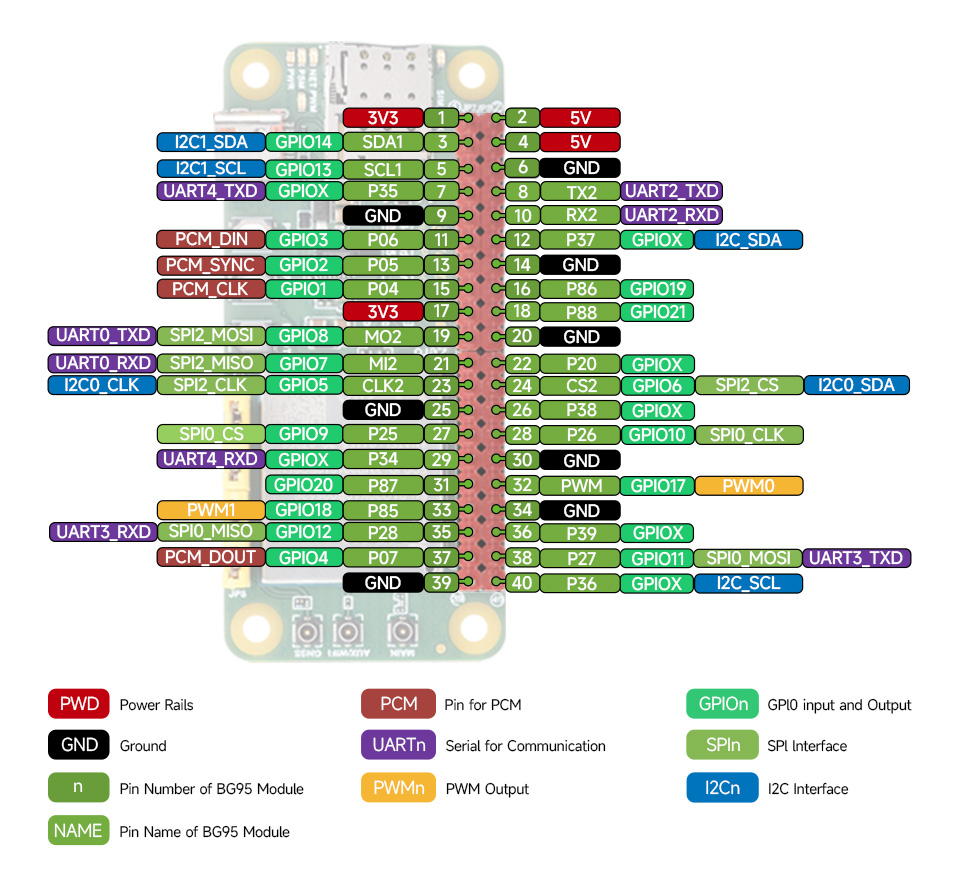
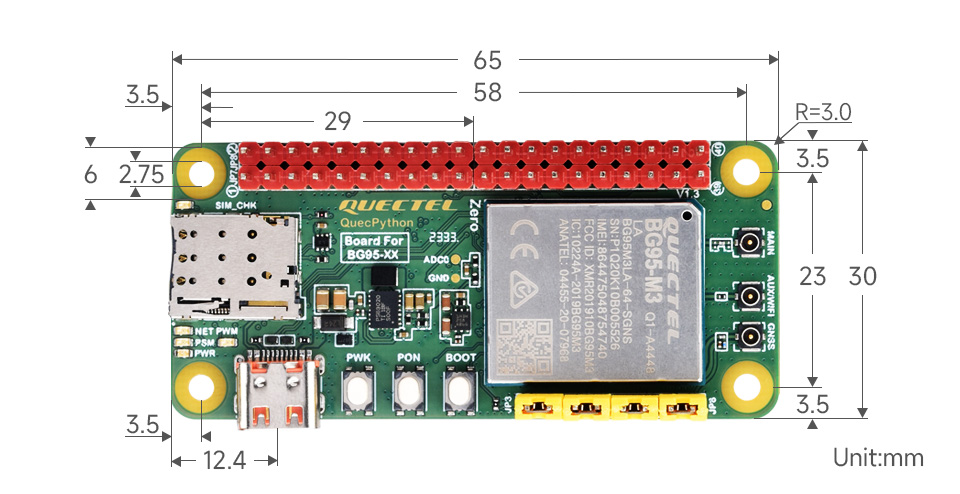


* Resources for different product may vary, please check the wiki page to confirm the actually provided resources.
Lieferumfang
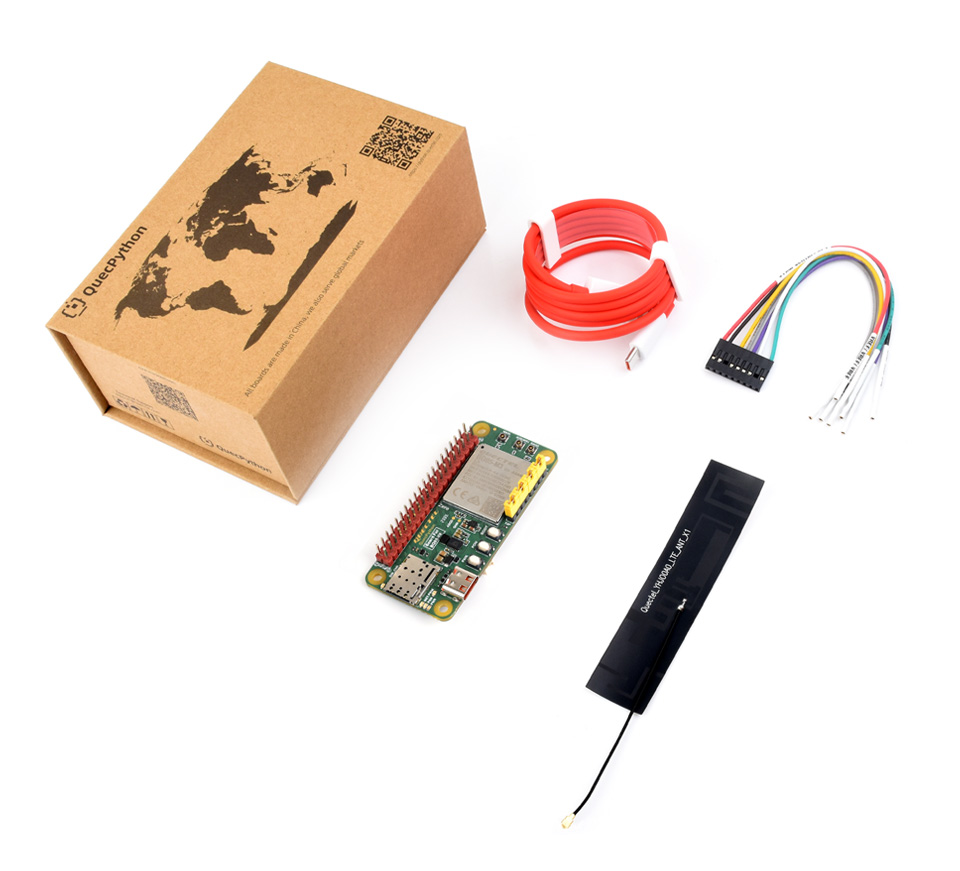
BG95-M3 Zero x1
Zahlungsmethoden
Zahlungsmethoden


